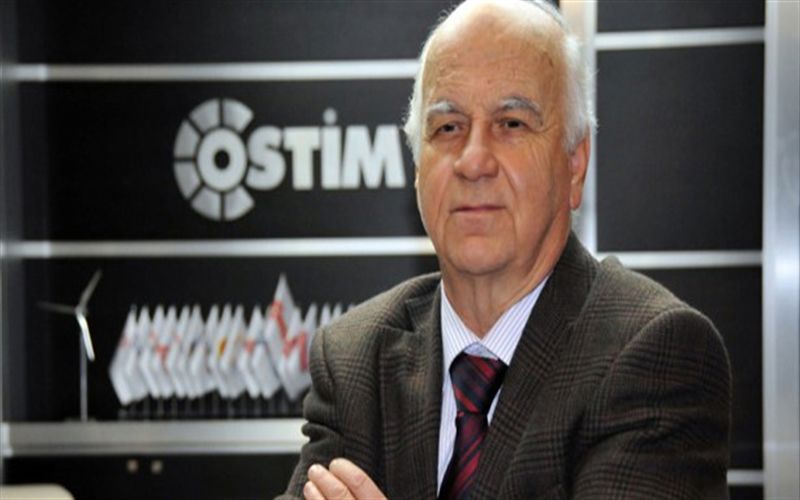
Prof. Dr. Sedat Çelikdogan
Honorary President of ARUS
07/04/1943-10/07/2016
A life dedicated to national industry...
Prof. Dr. Sedat Çelikdogan was born on April 7, 1943, in Turgutlu, Manisa. His father was Abdullah Efendi from Malatya, and his mother was Asima Hanım from Sarajevo. During the migrations that took place during the Balkan Wars, his parents met in Istanbul, got married, and settled in Turgutlu, Manisa. Sedat Çelikdogan was born in Manisa and completed his primary and secondary education in Turgutlu. He then passed the entrance exam for a boarding school and finished high school in Manisa city center. After graduating from high school, he passed the entrance exam for the Mechanical Engineering Faculty at Istanbul Technical University and went to Istanbul. He completed his Mechanical Engineering degree in five years, earning the title of Mechanical Engineer. During these years, ITU was a good university, operating according to German standards and mostly taught by German professors. In his third year of university, he began taking engine courses from Professor Necmettin Erbakan. He met Professor Erbakan here. At that time, Professor Erbakan had completed his doctoral and associate professorship theses at Aachen University in Germany and had come to Turkey to teach at Istanbul Technical University (ITU). Aachen was a research center for engines in Germany, and Professor Erbakan had both participated in engine research there and completed his doctorate at that university. The team he worked with on engines was led by Professor Dr. Hans List, who was world-renowned for writing many books on engines and establishing a research center in his name, and his experienced engine team.
Within this team effort, Professor Erbakan excelled in his work on the German project to develop an air-cooled tank engine. After returning to Turkey, Professor Erbakan simultaneously taught engine courses and completed his professorship thesis. Professor Sedat Çelikdogan, highly knowledgeable in engine technology and influenced by Professor Erbakan's excellent teaching, continued his university work as an assistant to Professor Erbakan in the Department of Engines after graduating. During this period, particularly after the 1960 coup, Professor Erbakan frequently traveled to Ankara to explain engine and industrial policies as a development model to the military. The military, in turn, took Professor Erbakan seriously and showed great interest in him. In addition to his technical expertise, Professor Erbakan, a devout individual who placed great importance on national values, continued his work, laying the foundations for a generation of knowledgeable and technologically proficient individuals, a generation rooted in the heritage of Turkey, the Ottoman Empire, and the Seljuk Empire. The decision to build the "Revolution Car" after the 1960 coup and the assignment of the Machine and Chemical Industry Corporation to industrial projects were all influenced by Professor Erbakan.
The Ottoman Empire, which was constantly fighting on various fronts for the last 200 years, lagged behind in science, technology, and education during this period. Especially during the War of Independence and the Battle of Çanakkale, young men as young as 14, 15, and 16 were sent to the front, conscripted into the army, and many became martyrs. Therefore, during these times, we were unable to provide adequate education, the country was in disarray, and our youth, the guarantee of the future, were martyred.
With the War of Independence, our country was reborn, and with the establishment of the Republic, the foundations of industry, the engine of development, began to be laid.
It was during this period, in 1956, that Professor Erbakan founded Gümüş Motor, a company intended for use in agriculture and boats. However, the company fell into great difficulty due to the devaluation of the country and the attempts by importer cartels to sink it. When the company ran into trouble, the Beet Cooperative and Sugar Factories acquired Gümüş Motor and changed its name to Pancar Motor. It was Professor Erbakan who laid the foundation of the motor industry, convinced Turkey that it could manufacture its own engines, established the company for this purpose, and prepared the infrastructure.
Professor Erbakan gave lectures in many places under the name of the Turkish Student Union at that time, both for spiritual and technological development. When Professor Erbakan became the General Secretary of the Union of Chambers and Commodity Exchanges of Turkey (TOBB), Professor Sedat also started his doctoral studies with Professor Erbakan.
Meanwhile, an interesting event occurred. Professor Erbakan was invited to head the Department of Motor Engineering at the University of Berlin, one of the world's leading universities, in Germany. However, since he had already entered politics, Professor Erbakan declined the position. Professor Sedat later began his associate professorship studies with Professor Erbakan. During this time, he also completed his military service as an Ordnance Lieutenant in Balikesir. In 1975, Professor Erbakan became Deputy Prime Minister in the Nationalist Front Government. During this period, he took over the Ministry of Industry and launched a development movement. This development movement included agricultural machinery, automotive, sugar factories, cement factories, and also factories in Anatolia to produce new shoes and machine tools to create employment. However, five key areas were selected as vital to the country's economy. These were:
For the Turkish engine industry, TÜMOSAN was established; for the production of these engines, the Machine Tools Industry (TAKSAN); for the electronics industry, TESTAS; for energy production facilities, TEMSAN; and GERKONSAN, which was responsible for preparing the infrastructure for the construction of these factories.
So, Professor Sedat was involved in the establishment of these five companies as the heavy industry coordinator. Upon completion of these establishments in 1976, Professor Sedat began his duties as the General Manager and Chairman of the Board of Directors of TÜMOSAN, tasked with developing the engine industry.
At that time, Turkey had automotive factories such as Renault, which produced the Toros car, and FIAT, which produced the Murat 124. However, pressed parts, engines, transmissions, and gearboxes were all imported to these factories; only the assembly and painting were done here.
It was a closed economy, and there was a time when you had to queue to buy a car. You would pay your money, and only after 6 months or a year could you get the car. So, it was a protected industry. Domestic contribution was very low. In 1976, there were advancements in the automotive industry, and production figures reached hundreds of thousands, but engines were not being produced for cars, trucks, or other vehicles.
Professor Erbakan and Professor Sedat started working on producing engines for these vehicles.
When Professor Sedat became the General Manager of TÜMOSAN, the first person to congratulate him was the late Turgut Özal. At that time, Turgut Özal was working as a manager in a private sector company in Istanbul. Turgut Özal had also tried very hard to bring the Perkins company to Türkiye to manufacture automobile and tractor engines, but he was unsuccessful. During his visit, Turgut Özal told Professor Sedat, "Congratulations, Sedat, but you've started a very ambitious engine project. If you can reach an agreement within three years, don't lose heart. Technology transfer is difficult because they don't want to give technology to Turkey. I tried for three years and couldn't bring it. If you can bring it within three or four years, you can consider it a success."
However, there was a determined government at that time, and Professor Erbakan was very insistent on establishing the motor industry. Professor Sedat and his team quickly started the projects, and in 1976, the first licensing agreement was made with Volvo for the Truck Engines Project. 350 horsepower engines were produced for trucks. Following this, a licensing agreement was made with Mercedes for the Truck Engines Project, and the factory was established in Aksaray. Immediately afterwards, a licensing agreement was made with the Italian Fiat for tractors and tractor engines, and the factory was established in Konya. An agreement was made with the Japanese Mitsubishi for light diesel engines for minibuses and vans. A licensing agreement was made with the German ZF company for the transmission system project.
With all these projects, it is planned to produce 100,000 engines and 30,000 tractors annually.
On the other hand, the introduction of TAKSAN Machine Tools initiated a major industrial drive.
There were challenges in being a coalition government during this period. Just as the foundations were being laid and the construction of factories was beginning to rise, the coalition broke down and the government fell.
Disturbed by all these projects, America and the West began imposing sanctions on Turkey.
The West says, "We will allow you four sectors to be opened up, and we will support you in these sectors."
These are the health, agriculture, energy, and education sectors. We will provide all kinds of support in these sectors. But we will never allow you to do anything outside of these sectors.
They say, "We are the only ones who can make engines, cars, tanks, weapons, airplanes, etc.; you can never enter these sectors."
This severe embargo cut off the flow of funding for Professor Sedat's projects. The World Bank also stopped its loans.
Italy, East Germany, and the Czech Republic did not comply with this embargo and approved the credit agreements. TAKSAN was established and started production with Eastern Bloc capital.
Professor Sedat requested loans from the Islamic Development Bank for agreements with Mercedes, Volvo, Mitsubishi, and Fiat. He made his first leasing agreement with the bank and purchased all the necessary machinery for TÜMOSAN from Italy. While these projects were underway, the government fell, and the work was obstructed. This once again demonstrated that stability and intelligent policies are fundamental conditions for the development of industry in a country.
When the government changed in 1977, irreversible projects were slowed down, and those in the initial stages were cancelled. Tümosan's Truck Engine Project and Tractor and Tractor Engine Projects continued because they were in advanced stages. However, Sedat Çelikdogan and his team were removed from their positions.
In 1978, the second Nationalist Front government was formed under the premiership of Süleyman Demirel. Prof. Dr. Necmettin Erbakan became Deputy Prime Minister and reappointed Sedat Çelikdogan as General Manager of Tümosan.
Transfer lines, machinery, and necessary equipment used in the production of tractor engines were purchased, and production was started at the factory in Konya.
However, two years later, when the September 12, 1980 coup took place, the projects were suspended. Sedat Çelikdogan and the project managers were dismissed, and a retired colonel was appointed as the General Manager of Tümosan, and the investments that had begun were halted.
Sedat Çelikdogan, together with the senior staff he worked with at Tümosan who were dismissed from their positions, founded SAM Engineering and started producing educational tools and equipment.
When SAM Engineering began experiencing difficulties, Sedat Çelikdogan initiated a new venture and founded Yavuz Motor to produce connecting rods. Thanks to connecting rod production, Yavuz Motor factory has become the first factory in Turkey to produce its own domestic and national diesel engine.
Sedat Çelikdogan later established Ortadogu Rulman Sanayi A.S. in Ankara-Polatli, a private sector initiative, to manufacture precision-produced ball bearings needed by Turkey. As General Manager, he secured a licensing agreement with the Austrian company Steyr. Today, this factory, a significant company in our country, exports 80% of its production.
ESTAS, Turkey's first and largest camshaft manufacturing plant, established in the private sector in 1977, supported the development of the automotive industry. During his time as Chairman of the Board of SAM Engineering, Coordinator of HEMA Gear Factory, General Manager of Middle East Bearing Industry, Chairman of the Board of Ankara Municipality BELTAS, and Member of the TÜBITAK Engineering Research Group, Sedat Çelikdogan made significant contributions to the country's national industrialization process.
In 1994, the National Vision movement achieved great success in local administrations. Sedat Çelikdogan took a position at BELTAS, a company founded by Prof. Dr. Necmettin Erbakan to provide technical support to municipalities. He developed solutions and projects for the development of municipalities under the Welfare Party's control. He initiated efforts to prevent the import of tram and metro vehicles, buses, and ductile pipes, and to promote their production in Turkey. He organized Local Government Fairs, bringing together municipalities and the companies serving them, and providing specialized training for municipal personnel.
In the 1995 elections, the Welfare Party won as the largest party, and subsequently, the 54th government (Welfare-Path coalition) was formed between 1996-1997 under the premiership of Prof. Dr. Necmettin Erbakan. Upon the formation of the Welfare-Path coalition, Prime Minister Erbakan appointed Sedat Hoca as the Prime Minister's chief advisor responsible for strategies.
Fate brought Prime Minister Erbakan and Professor Sedat together again for the development of national industry. Professor Sedat ensured the establishment of the Industrial and Technological Development Center (SATEM) for the restructuring of the state in Turkey. Sedat Çelikdogan understood from his previous experiences that if you do not restructure the state and simultaneously raise public awareness, you can never succeed in realizing the projects you want to implement. According to Professor Sedat, projects could not be carried out without creating legislation and laws, and without organizing from top to bottom.
Sedat Çelikdogan emphasized that our legislation is designed for purchasing, not production, and that a new structure focused on production and export was necessary to change the policy of "Western countries will produce, we will buy," a policy that has existed since the Tanzimat era. Therefore, a restructuring of the state was necessary.
For this structure, under the leadership of Sedat Çelikdogan, teams were formed for both industrial policies and the D-8 movement, laying the foundations for the D-8 project, which would ensure the establishment of Islamic unity. Similar to our country's heavy industry drive in the 1970s, the goal was to foster joint production among Islamic countries, producing goods such as automobiles, aircraft, ships, agricultural machinery and equipment, and defense industry equipment together with the D-8 countries.
The meetings attended by Prime Minister Erbakan and chaired by Sedat Çelikdogan included representatives from the private sector, important figures from the government, and, depending on the agenda, some ministers. These meetings served to gauge the pulse of the country and the private sector. For example, the removal of six zeros from the currency was discussed during these meetings.
Important meetings were held regarding highways, high-speed trains, development initiatives, ports, and industrialization. In Professor Erbakan's privatization model, after companies became profitable, 51% would be offered to the public. Almost all of the decisions made here were implemented during the AK Party's time in power. At SATEM, Professor Sedat initially focused on the automotive sector. This sector consumed a significant amount of foreign currency; even if you gave it all of Turkey's exports, the foreign currency wouldn't be enough. To prevent this, new models would be produced in Turkey and exported worldwide. Renault/Megane was born from this strategy. However, it wasn't enough. Designing the vehicles here, producing and exporting national brands were necessary, but these things couldn't be done exactly as Professor Sedat wanted.
In the textile sector, Turkey produces yarn and fabric and wants to transition to garment manufacturing, but this requires machinery. These necessary machines were imported from Italy. Professor Sedat initiated efforts to solve this problem by working towards the production of these textile machines in Turkey.
Professor Sedat and his team initiated the D-8 project under the leadership of Professor Erbakan. There was a need for unity among Islamic countries in terms of politics, technology, and industrialization. In this context, Professor Sedat visited Indonesia and Malaysia, observing that Indonesia had an advanced aircraft industry and was producing its own planes, while Malaysia was very advanced in electronics. After consulting with Professor Erbakan, a high-level delegation was formed and traveled to Malaysia, Indonesia, Pakistan, and Iran. The first step towards establishing the D-8 was taken with the "Conference on Cooperation in Development," held in Istanbul on October 22, 1996, at Turkey's invitation, with the participation of Iran, Pakistan, Bangladesh, Malaysia, Indonesia, Egypt, and Nigeria. The D-8 was officially established on June 15, 1997. Naturally, this move caused great unease in the West. All the leaders of the D-8 countries attended the first meeting. Professor Sedat and the SATEM team prepared 130 projects for the D-8 project. In the D-8 project, countries were divided among themselves according to their strengths, determining who would handle trade, establish industry, develop R&D, manage banking, agriculture, and employment. Turkey focused on healthcare and industrialization, Indonesia on employment and agriculture, and Malaysia on finance and electronics. Work was also initiated on the production of an agricultural aircraft in Turkey. This aircraft was completed at that time and is now in a hangar at TAI (Turkish Aerospace Industries).
While other projects were in the initial stages, the February 28 coup took place in Turkey. Despite this, the planning for the automotive industry, and projects for spraying and firefighting aircraft were approved. Meanwhile, work was also carried out on rail system vehicles. The projects were presented to the Chief of General Staff, the Gendarmerie, and the commanders of the Land, Sea, and Air Forces. Despite being highly praised, they could not be implemented due to pressure from the West and the media.
To obstruct these projects, America and the West first removed Professor Erbakan from power through the February 28 coup. Following this, Indonesian President Suharto, who had been in power for 25 years, was removed from power in 1998. Around the same time, Malaysian Deputy Prime Minister Anwar Ibrahim was also removed through various machinations, as were the Nigerian president and the Nawaz Sharif government in Pakistan, both through coups. Thus, the D-8 project, aimed at fostering economic cooperation among 1.5 billion people in the Islamic world, lost its former momentum and importance.
Furthermore, these obstacles have prevented Turkey from achieving the desired results in its economic cooperation efforts with the EU, the Black Sea Economic Cooperation, the Balkan countries, and the Turkic Republics.
After the Welfare Party-True Path Party government resigned, Sedat Çelikdogan continued to work in the management of the Ostim Organized Industrial Zone, finding solutions to the problems of industrialists and contributing to the development of the industry. He completed his unfinished academic career and became a Professor at Karabük University in 2014.
Professor Sedat never gave up; at every opportunity, he continued his work for his beloved country and national projects, under the umbrella of Ostim Organized Industrial Zone, together with the President of Ostim Organized Industrial Zone, Mr. Orhan Aydin. I, too, started working alongside the late Professor Sedat at Ostim Organized Industrial Zone as his assistant, having previously met him at ESAM meetings. Here, we worked together on many projects. I learned a great deal from him.
One of these is the National Wind Energy Systems Development and Prototype Wind Turbine Production (MILRES). This project aims to develop and produce prototypes of industrial-scale wind turbines capable of generating electricity with capacities of 500 kW and 2.5 MW, using entirely original and domestic technology. In the first stage of the TÜBITAK project, a 500 kW wind turbine will be developed. This prototype will be used for testing purposes, and after the design is refined, a 2.5 MW turbine prototype will be developed. The 500 kW wind turbine has been successfully tested in Terkos, Istanbul. Preparations for the second stage, the 2.5 MW wind turbine, are currently underway.
In 2012, Sedat Çelikdogan brought together rail system manufacturers in Ankara, playing a significant role in the establishment of the Anatolian Rail Transportation Systems Cluster (ARUS) and in securing a 51% domestic content requirement for the procurement of 324 metro vehicles, a tender held in Ankara and won by the Chinese company CSR. This 51% domestic content requirement in rail systems marked a milestone and paved the way for the introduction of this requirement in all subsequent tenders in Turkey. The ARUS cluster members, achieving a national brand in rail systems that had not been possible in the automotive sector, not only secured a 60% domestic content requirement but also, in line with Sedat Çelikdogan's vision of national branding, produced the first nationally branded trams, light metro vehicles, and tram-buses in Turkey. 224 domestically produced vehicles manufactured by companies such as Bozankaya, Durmazlar, and Istanbul Ulasim are now serving in the cities of Kayseri, Istanbul, Bursa, Samsun, Kocaeli, and Malatya.
Professor Sedat Çelikdogan, the founder of Yavuz Motor, Turkey's first domestic and national engine factory, worked intensively and formed teams to produce traction engines for the national locomotive and tank engines in Turkey.
In addition, he participated in many projects in Ostim such as the National Metro, National Zeppelin, National Radar, National Rocket, Virtual Factory, Ekoman projects, 3D Design Center, Engineering and Design Center, and the continuation of the D-8 project.
Sedat Çelikdogan made significant efforts to increase domestic contribution in public tenders in Türkiye through offsetting, or as it is now called, the Industrial Cooperation Program (SIP), and was an influential figure in the publication of the SIP regulations.
While pursuing all these endeavors, Sedat Çelikdogan also completed his unfinished academic career, becoming a Professor at Karabük University in 2014, where he made significant contributions to the education of Rail Systems Engineering students. He also served as a founder and trustee of Ostim Technical University.
In Sedat Çelikdogan's understanding of domestic production and national branding,
If a product is manufactured in Turkey but its brand (design, know-how, patents, license rights) does not belong to us, then it is considered domestic production. Renault and Fiat car brands can be given as examples. Yes, if production in Turkey is done with 70% domestic contribution, but the design, brand, and license rights do not belong to us, then it is domestic production, not national production. There is only domestic contribution here. However, if production in Turkey is done with at least 51% domestic contribution financially, and the design, IP (license, know-how, patent) rights belong to us, and the brand belongs to us, then this production is national production and the product is a nationally branded product. Arçelik, Vestel, Aselsan, Durmazlar, Bozankaya can be given as examples.
Professor Sedat Çelikdogan was always ready to create national brands. He was a self-confident, enthusiastic, and patriotic individual with a strong national consciousness and stance, who loved his country. According to his belief, possessing production and R&D power was more important than having military strength. Even if you equip your army with the world's most powerful weapons purchased from abroad, if you cannot produce or design these weapons, you can never be a leader. China, Japan, South Korea, and Germany became world leaders through production. He believed that if you cannot produce, if you cannot have national brands, even if you become a global financial center, you will only be a servant, not a power in the world.
Professor Dr. Sedat Çelikdogan, Founder and Honorary President of the Anatolian Rail Transportation Systems Cluster, passed away on July 10, 2016. May God have mercy on his soul and grant him paradise.
Dr. Ilhami Pektas